


Winter travel in a motorhome
A winter motorhome trip sounds, at first glance, like cosy blankets, clear skies, quiet villages and movie nights while it’s cold outside. And yes, it can be exactly that… as long as you are prepared. Winter has its challenges: wet roads, fewer hours of daylight, low temperatures and more time spent inside the vehicle. But it also has advantages that many overlook: fewer crowds, better prices and a sense of calm that is hard to find in August.
In this article we are going to see how to prepare a6> both the motorhome and yourself for travelling in winter wisely: what to check, what to take and what to bear in mind so that the a20> the cold weather does not ruin the trip, but rather that it makes it different and special.
Why take a trip in winter in a motorhome?
Choosing a winter motorhome trip has many advantages:
Fewer people: tourist destinations are quieter, there are fewer queues and more peace and quiet.
Better prices: at many campsites and areas, prices drop in the low season.
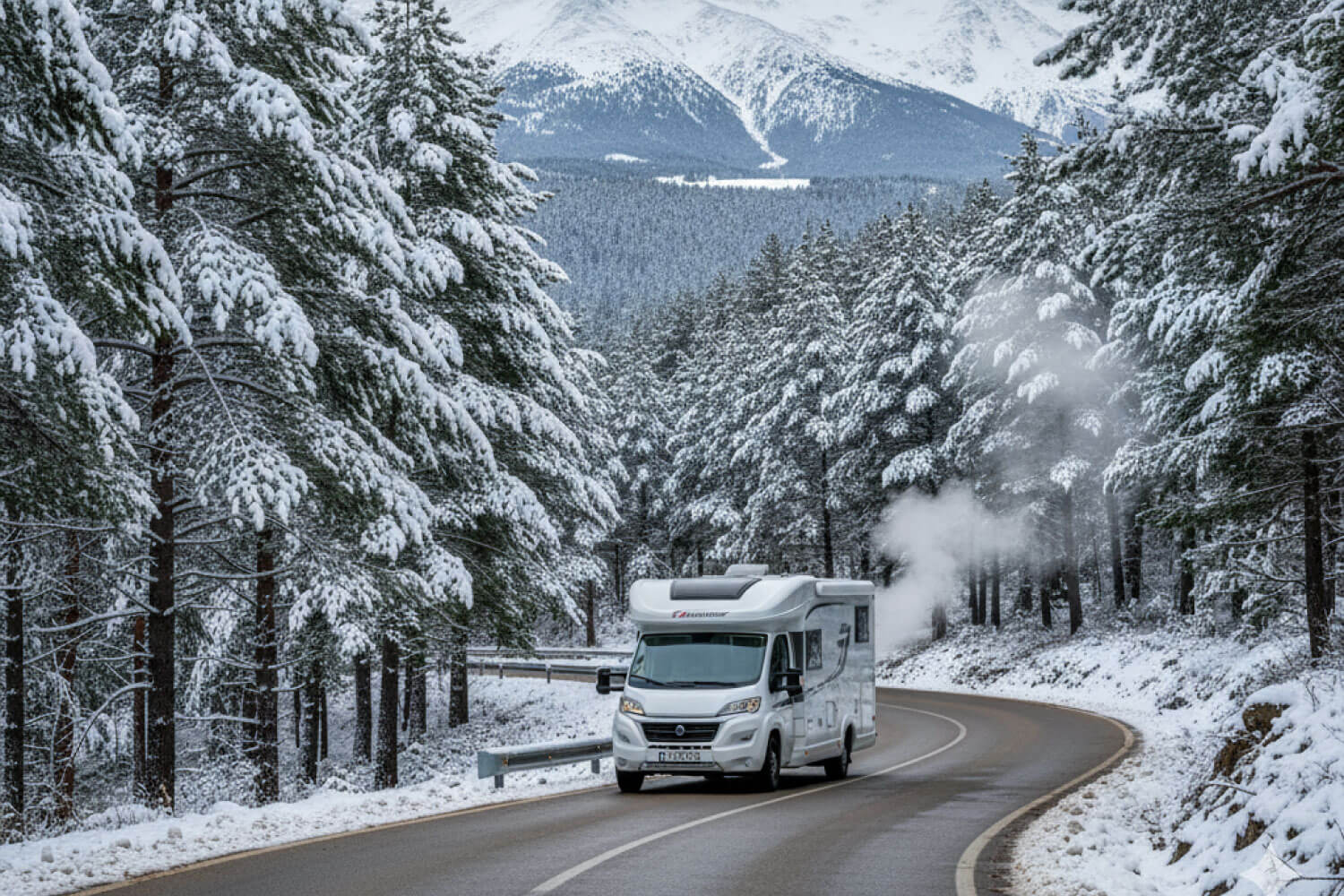
Another type of landscape: snow, white mountains, misty forests, villages lit up at Christmas time… it’s a whole different ball game.
More ‘inner life’: you enjoy your vehicle more, cooking inside, playing board games or reading with a hot cup of tea.
Of course, improvising in summer is not the same as improvising in the middle of January. A winter getaway in a motorhome requires a little more planning.
Prepare the motorhome for winter
Before setting off on your winter motorhome trip, it is essential to thoroughly check the vehicle. This is not a whim: it will save you from unpleasant surprises, cold weather and possible breakdowns.
Heating and insulation
Heating is the key to everything:
Check that your system of heating (gas, oil, electric) is working properly and without faults. Do a test several hours before the trip.
Always carry extra fuel or gas. Consumption is higher in winter because the heating works much longer.
Check the seals on doors, windows, and skylights. If air is coming in somewhere, you will notice it immediately because of the cold sensation.
Thermal window covers (internal or external) are extremely helpful in retaining heat, especially in the cabin.
You don’t need to wear short sleeves inside, but it is important to be comfortable without shivering.
Deposits, pipes and damp
In cold weather, water and humidity require extra attention:
Keep an eye on the tanks and pipes if you are going to be travelling through areas where freezing temperatures are expected. If your motorhome allows it, try to ensure that most of the circuit is protected or heated.
Avoid always travelling with full clean water and grey water tanks. It is better to fill and empty them frequently.
Condensation is inevitable when it is cold outside and warm inside. To reduce it:
Ventilate for a few minutes in the morning and evening.
Use a couple of small dehumidifiers (the tablet type) in problem areas.
Do not dry all wet clothes indoors if you can avoid it; try to do so in the garage or outdoors when the weather permits.
How to dress and what to take for a winter trip
In winter, a significant part of your comfort depends not only on the motorhome, but also on your clothing.
Clothing by layers
The golden rule: layers. It’s more useful than wearing a single huge coat. Think about:
First layer: thermal or technical fabric T-shirts that retain heat and wick moisture away from the skin.
Second layer: fleece or sweatshirt to retain heat.
Third layer: windproof and waterproof jacket for outdoor use.
And don’t forget:
Socks good ones (better few and of high quality than many thin ones).
Hat and neck warmer, which take up little space and make a world of difference in terms of thermal sensation.
Gloves for walks and also for possible tasks with the vehicle in cold weather.
Bedding and textiles that make a difference
Sleeping well is vital for enjoying your winter motorhome trip:
Use a good duvet or sleeping bag for sleeping of quality, designed for temperatures below freezing.
Keep extra blankets handy for the sofa or for particularly cold nights.
A mat on the floor helps prevent that ‘icy floor’ feeling every time you take off your shoes.
Small textiles can transform the interior of the motorhome into a cosy retreat.
Driving and road safety in winter
In winter, the road rules. Even if you’re not heading for the high mountains, the cold and rain change the game.
Some basic points:
Check your tyres (condition and pressure) before setting off. If you are travelling to snowy areas, consider using winter tyres or at least carry snow chains and know how to fit them.
In rain, snow or fog, reduce your speed and increase your safety distance. With a motorhome, the weight and height are much more noticeable.
Always carry some food, water and warm clothing with you in case you have to wait on the road longer than expected.
If possible, avoid difficult mountain passes at night and when snow is forecast. It is better to adjust your route slightly than to find yourself in a stressful situation.
Planning driving stages with fewer kilometres and more time allowance is a good trick at this time of year.
Tips for enjoying winter without stress
To top it off, here are some simple tips that make all the difference:
Have a quick ventilation routine in the morning and at night to avoid feeling stuffy.
Make the most of the daylight hours to go for walks and get some exercise, and leave indoor chores for when it gets dark.
Prepare a “winter afternoon kit”: board games, cards, books, a downloaded series… so that the hours spent indoors are filled with fun, not boredom.
Listen to your body: if you are feeling more tired one day, reduce your mileage, find a comfortable area and make it a ‘blanket and rest day’.
With good preparation, a winter motorhome trip can be one of the cosiest experiences of the year. Less crowds, more peace and quiet, and the feeling of having your own little refuge on wheels always at hand, whatever the weather outside.